
Should I Correct My Child?
July 1, 2026
Your child is putting on their shoes.
You are watching.
The left shoe goes on the right foot. The right shoe goes on the left.
They stand up. Look down. Completely satisfied.
Meanwhile, every part of your adult brain is screaming: The shoes are wrong.
Do you say something?
Maybe. Maybe not.
Welcome to one of my favorite Montessori answers.
It depends.
I know. Very helpful.
But I think adults have become so used to correcting children that sometimes we do it before asking whether the correction is actually necessary.
The child says a word incorrectly. We correct it. They place something in the wrong order. We correct it. They hold an object differently than we would. We correct it. They color the sun purple.
Hopefully, we have all agreed to leave the purple sun alone. But you understand what I mean.
Adults notice errors very quickly. We have years of experience. We already know what the finished result is supposed to look like, and when a child's attempt does not match that result, we feel an almost physical need to point it out.
Sometimes correction is important. Sometimes a child needs information. Sometimes safety requires immediate intervention.
But sometimes? The child was already in the middle of figuring it out. And then we arrived.
Before You Correct, Ask What Is Actually Happening
I think observation changes this entire conversation.
A child is doing a puzzle. They put a piece in the wrong place. You notice immediately.
What happens next? That is the part I want to see.
Does the child notice? Do they try another piece? Do they look more closely? Do they turn the piece? Do they remove something they already placed? Do they stop? Do they ask for help?
If I correct the child the second the piece touches the wrong space, I never learn what the child would have done next. I interrupted the information.
Sometimes adults say: "My child doesn't problem-solve." And I wonder how often the child is given enough time to encounter a problem.
A problem appears. We solve it. Another problem appears. We explain. The child makes an error. We point it out. Then we become concerned that the child always asks for help.
Maybe we trained them very well. The adult became the control of error. The child learned: Someone will tell me when it is wrong.
That is why I try to pause. Not forever. Not as part of a strange experiment where I silently watch a child become increasingly miserable. Just long enough to observe.
What does the child do with the information already available to them? The answer may surprise you.
Not Every Mistake Needs an Announcement
Imagine if someone followed you around all day and announced every mistake you made.
"You missed a spot." "That isn't the right drawer." "You pronounced that incorrectly." "You forgot your water." "Your shirt is inside out." "You skipped a step." "You are holding that differently than I do."
By lunchtime, you might have some feelings about this person.
Children experience correction constantly. Some of it is necessary. They are learning how the world works, and adults have information children do not yet have.
But I think we need to be aware of the volume. How many times in one day does a child hear: No. Not like that. Wrong way. Be careful. That's not where it goes. You forgot. Try again. No, the other one.
Sometimes the adult is not angry. We are simply giving information. But from the child's perspective, there may be a constant soundtrack of someone noticing what they have not done correctly.
That can change the experience of trying.
I want children to be able to attempt something without feeling like an adult is standing beside them waiting for the error.
So before I correct, I try to ask: Does the child need this information right now?
Sometimes yes. Sometimes the mistake can just exist for a moment. Very uncomfortable. I know.
The Shoe Can Teach
Let's return to the shoes.
The child puts them on the wrong feet. You can see it.
Does the child notice discomfort? Do they look down? Can they walk comfortably? Are they about to spend eight hours in shoes that are hurting them?
Context matters.
Maybe you say: "Your shoes are on opposite feet." That is not a parenting failure. Information is allowed.
But maybe the child stands up, takes three unusual steps, looks down, and sits back down. Interesting. The child received information from their own body. That experience belongs to them.
The shoes explained themselves.
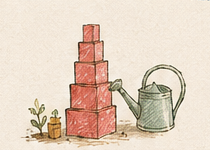
Children receive information from the environment all the time. Water spills. A tower falls. A puzzle piece does not fit. The container does not close. The sleeve is twisted. The backpack feels too heavy because the child put fourteen rocks inside.
The world provides feedback. Sometimes the prepared adult allows that feedback to reach the child before adding our own voice.
Natural information is powerful because the child is directly connected to what happened. I poured too much. Now the glass is difficult to carry. I put this here. Now the lid does not close. I built it this way. It fell.
The child is not being told they are wrong. They are having an experience. There is a difference.
Correction Can Interrupt Concentration
Imagine you are working on something difficult. You are focused. You have almost figured it out.
Then someone leans over. "No. Move that." You move it. "Now turn this." You turn it. "Not that much."
At some point, are you still doing the work? Or are you following instructions?
This is what I think about when a child is deeply engaged. Even if I see an error. Is the correction more important than the concentration happening right now?
Sometimes it is. If the child has misunderstood something fundamental or is developing a habit that may make future work much more difficult, I may need to offer another presentation.
But timing matters. I may not need to interrupt the exact moment when the child is fully engaged. I can observe. Make a note. Return later.
This is difficult for adults because once we see the mistake, we cannot unsee it. The bead is in the wrong place. The mat is turned the wrong direction. One object is missing. It is all we can see now.
Meanwhile, the child is concentrating. Which one matters more in this moment?
The answer is not always the perfect finished product. Sometimes protecting the child's relationship with work matters more than immediately fixing every detail.
Correcting and Teaching Are Not Exactly the Same
Correction often happens after the child makes an error. "No, that's wrong." "Not that way." "You forgot this."
Teaching gives the child information they can use.
A child is repeatedly spilling while pouring because the pitcher is being held very far from the glass. I could wait for every spill and say: "Careful." "Careful." "Careful." The word has now lost all meaning.
What does careful look like?
The child may need another presentation. I can show them. Slowly. Bring the pitcher close to the glass. Use two hands if appropriate. Tilt. Pause. Return the pitcher upright.
Now the child has visual information. That is teaching.
Sometimes children continue making the same mistake because we keep correcting the result without giving clear information about the process.
"Your jacket is wrong." Okay. What part? "Be more careful." How? "Clean it better." What does better look like?
Adults often believe we have explained something when we have actually just expressed dissatisfaction. That is not the same thing.
If a child genuinely does not know how to do something, correction may not be enough. They may need us to teach.
Sometimes I Correct Because I Am Uncomfortable
This is where the adult has to be honest.
The child is working. Something is slightly off. No one is in danger. The material is not being damaged. The child is still engaged. Why do I need to correct it?
Sometimes the answer is: Because it bothers me.
There. We said it.
Adults have preferences. We like things done a certain way. We know the efficient way. We know the neat way. We know the way that will not create an extra load of laundry.
The child has decided to use another method. And I am watching. Deep breaths.
Sometimes our correction is less about the child's development and more about the adult wanting the environment to return to a state that feels comfortable.
The child folds a towel. It is technically folded. Is it folded the way you would fold it? Absolutely not. It looks like the towel had a difficult day. Does it fit where it needs to go? Yes. Maybe we leave it.
The child makes the bed. One corner is completely exposed. The blanket is diagonal. A stuffed animal appears to have been trapped underneath. Is the child proud? Did they complete the process? Maybe today, that is enough.
Correction does not have to happen every time the child's result fails to meet the adult standard. Children are beginners. Their work should sometimes look like beginner work.
Ask Yourself: Is It Safety, Respect, or Preference?
Is there a safety concern? Is another person being affected? Is the environment or material being damaged? Or is this simply my preference?
If a child is running toward a parking lot, I am not observing to see what happens next. I intervene.
If a child is holding scissors in a way that puts themselves or another child at risk, I step in.
If a child hits, throws a heavy object, or damages something, the adult needs to respond. "I will not let you hit." "The scissors stay at the table." "I cannot let you throw the glass."
These are not moments for vague philosophical reflection. The limit matters.
But sometimes the situation is: The child put the blue cup where I normally put the green cup. Okay. We may survive.
Or the child is carrying an object with two hands when I would use one. Or they drew the tree much larger than the house. Or they buttoned the sweater starting from the middle.
Before I correct, I try to understand which category I am in. Safety? Respect? Care of the environment? Or adult preference?
My preferences are real. They simply do not all need to become rules.
Language Is Where Adults Correct Constantly
Children say words incorrectly. They use the wrong tense. They invent grammar. Sometimes beautifully. "I goed there." "There are two mouses." "I eated it."
Our adult brain notices. Do we say: "No. Not goed. Went."
You can. But there is another way to offer correct language without turning the conversation into a lesson every time.
The child says: "I goed to Grandma's house." You might respond: "You went to Grandma's house? What did you do there?"
The child hears the correct form. The conversation continues. You modeled language without stopping the child's story to evaluate their grammar.
This matters to me because communication has a purpose. The child is trying to tell you something. Imagine being very excited to share a story and the person listening stops you after your first sentence to correct a verb.
Wonderful. Very motivating.
There may be times for direct language work. There may be sounds or patterns a parent, guide, or speech-language professional is intentionally supporting. That is different.
But in ordinary conversation, I often think modeling can be more respectful than constantly announcing the error.
What About Pronunciation?
Your child says a word incorrectly. Do you correct them? Again, context matters.
Sometimes the pronunciation is developmentally expected. Sometimes there is a pattern worth observing. Sometimes a child may benefit from additional support from an appropriate professional.
I am not diagnosing speech development from a blog. Please speak with your child's pediatrician or a speech-language professional if you have concerns about your child's communication.
But in everyday conversation, I try not to turn every mispronounced word into a public performance.
The child says: "Pasghetti." You can respond: "Yes, we're having spaghetti." You gave the word. No speech drill required.
There can be a time and place for intentional practice when it is needed. But not every interaction needs to become correction. Sometimes modeling is enough. Sometimes we observe over time. Sometimes we seek professional guidance.
Correcting Art Makes Me Nervous
A child draws a person. The arms come directly out of the head. Excellent. Welcome.
Then an adult says: "Where is the body?" The child looks. "People have bodies. Draw the body here."
Now the drawing looks more anatomically accurate. Did we help?
Maybe the adult thinks so. But what was the child's purpose? Were they taking an anatomy exam? Or were they representing a person using the understanding and abilities they currently have?
Children's drawings change. Their observations change. Their control of movement changes. The way they represent the world changes. I do not need to rush every image toward adult realism.
The sun can be purple. The person can be larger than the house. The cat may have eight legs.
Maybe ask the child about the drawing. You may learn something. "This is me and this is my dad and this giant circle is a dinosaur egg."
Good thing you did not say: "What a beautiful ball."
When a Child Asks, Answer Honestly
Sometimes children know something is not quite right. "Is this how it goes?" "Did I do it right?" "Is this a B?"
Now the child is inviting information. I do not think we need to become mysterious.
The child asked whether it is a B. We can help. "That is a D. The line is on this side for B. Would you like me to show you?" Clear. Respectful. Information is not harmful.
Montessori is not about adults hiding all knowledge so children are forced to discover every fact independently. I know where the bathroom is. If the child asks, I will tell them.
The question is how we use our knowledge. Do we constantly insert it before the child has a chance to think? Or are we available when information, guidance, or a presentation is needed?
A child's request for help matters. When they ask, listen carefully. Sometimes they want reassurance. Sometimes they genuinely do not know. Sometimes they know but are afraid of being wrong.
If a child constantly asks: "Is this right?" I may begin observing their relationship with correction. Are they checking because the work requires information? Or have they learned that an adult must approve each step before they continue?
"You Know How to Do This" Is Not Always Helpful
A child asks for help. The adult knows the child has completed this task before. "You know how to do it."
Maybe. But right now, the child is asking. Why?
Are they tired? Did something change? Are they seeking connection? Did they forget one step? Are they afraid of making a mistake?
Sometimes adults respond to a request for help as though the child is trying to deceive us. "I've seen you do this before." Yes. And I have successfully logged into the same website fifty times and still occasionally forget my password.
Ability is not always perfectly available on demand.
We can acknowledge what we know without dismissing the child. "You have done this before. Show me where you are getting stuck." Now I can observe.
Be Careful With "No, Like This"
A child begins a task. "No, like this." They try again. "No, hold it here." Again. "No, the other hand." Again. "Slow down." Again. "Watch me."
At some point, the child may stop. "Can you do it?"
Adults sometimes interpret this as laziness. I think sometimes the child has simply realized that the easiest way to stop being corrected is to hand the task back to the expert. You. Congratulations. Your standards worked. Now you have the job.
Does the child need each piece of information? Can I step back and look at the whole process? Maybe I need to give another clear presentation instead of directing every movement while the child works.
If I am correcting the child's hand every two seconds, the child may be paying more attention to my voice than to their own movement.
Sometimes I show. Then I let the child work. I may observe something I want to present again later. That separation can protect the child's concentration.
Let the Child Repeat an Error Sometimes
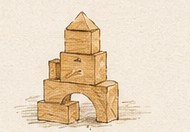
A child is building something. It falls. They build it the exact same way. It falls. Again. Same. Falls.
My adult brain has identified the problem. I know exactly what needs to change.
But sometimes repetition is part of the child's thinking. The child may be testing. Was it the same? What if I move this? What if I use more force?
Children do not always process an error the first time the way adults do. Sometimes they repeat the action. That does not necessarily mean they learned nothing. It may mean they are gathering information.
This is difficult to watch when the solution is obvious to us. But of course it is obvious. We have more experience. The child is building that experience.
There may come a point when frustration takes over or the child is no longer productively engaged. Then I may offer help. "I see it keeps falling. Would you like me to show you something I noticed?"
Information can be offered respectfully. The goal is not to withhold knowledge. It is to avoid stealing the thinking before the child has had a chance to do some of it.
Frustration Does Not Always Mean Stop
A child is struggling. Their face changes. The task is difficult. Adults feel the tension. We help.
Sometimes that is exactly what the child needs. But not every moment of frustration is harmful.
Learning can be frustrating. Buttons are frustrating. Zippers are frustrating. Puzzle pieces that absolutely look like they should fit but somehow do not fit are frustrating.
Children need safe experiences moving through difficulty. The question is whether the child is still connected to the task. Are they trying? Are they adjusting? Are they able to receive information?
Or has frustration become so intense that the child is no longer learning from the experience?
A child who is serious, sighing, and trying again may not need rescue. A child who is crying, throwing the material, and unable to engage may need the adult to step in.
"I see this is feeling very difficult." Maybe we help. Maybe we put the work away and return later. Maybe the child needs connection before they can continue.
Waiting is not the goal by itself. The goal is understanding what the child needs.
Correct Privately When You Can
Imagine making a mistake in front of a group. Then someone announces it. "No, that's wrong." Everyone looks. Fantastic.
Children have dignity too. If correction is needed, I try to think about how it is offered. Can I speak quietly? Can I give another presentation later? Does the entire group need to hear about one child's mistake?
Sometimes adults correct children publicly because we think the whole group can learn from it. Maybe. But the child who made the mistake may also learn: When I get something wrong, everyone finds out.
That can make children more cautious. I want children to attempt things. Ask questions. Make errors. Try again.
A classroom or home cannot become a place where mistakes feel dangerous. This does not mean pretending an answer is correct when it is not. It means respecting the person receiving the information.
"You thought this said 'cat.' Let's look at the middle sound together." Information. No shame. No dramatic reaction.
Watch Your Face
Sometimes the words are fine. Our face is not.
The child spills. You say: "That's okay." Your face says: This is absolutely not okay. The rug is ruined. Our family will never recover.
Children notice.
The child shows you their attempt. You say: "Interesting." Your face says: What happened here?
Children are excellent observers. When we talk about correction, we have to consider the entire adult response. The sigh. The quick movement. The way we take the object. The tone. The raised eyebrow we did not know we had.
This is not a call for adults to become expressionless. You are allowed to have a face. Sometimes I am genuinely surprised. Sometimes I am frustrated. The goal is awareness.
If I want a child to feel comfortable making mistakes, what happens in my body when they make one? Do I tense? Rush in? Laugh? Immediately call another adult over?
Please do not make the child's error family entertainment. Especially when they are standing there.
Children Need Correct Information
There is a version of child-centered education where adults become afraid to provide any direct information. The child writes a 7 backward. We stare thoughtfully. The child calls every animal a horse. We respect their truth.
No.
Children need language. They need accurate names. They need demonstrations. They need adults who know things.
In Montessori, the adult prepares carefully because presentations matter. We show children how to use materials. We offer language. We connect them to information.
The question is not whether children should ever be corrected. It is whether correction is our automatic response to every error.
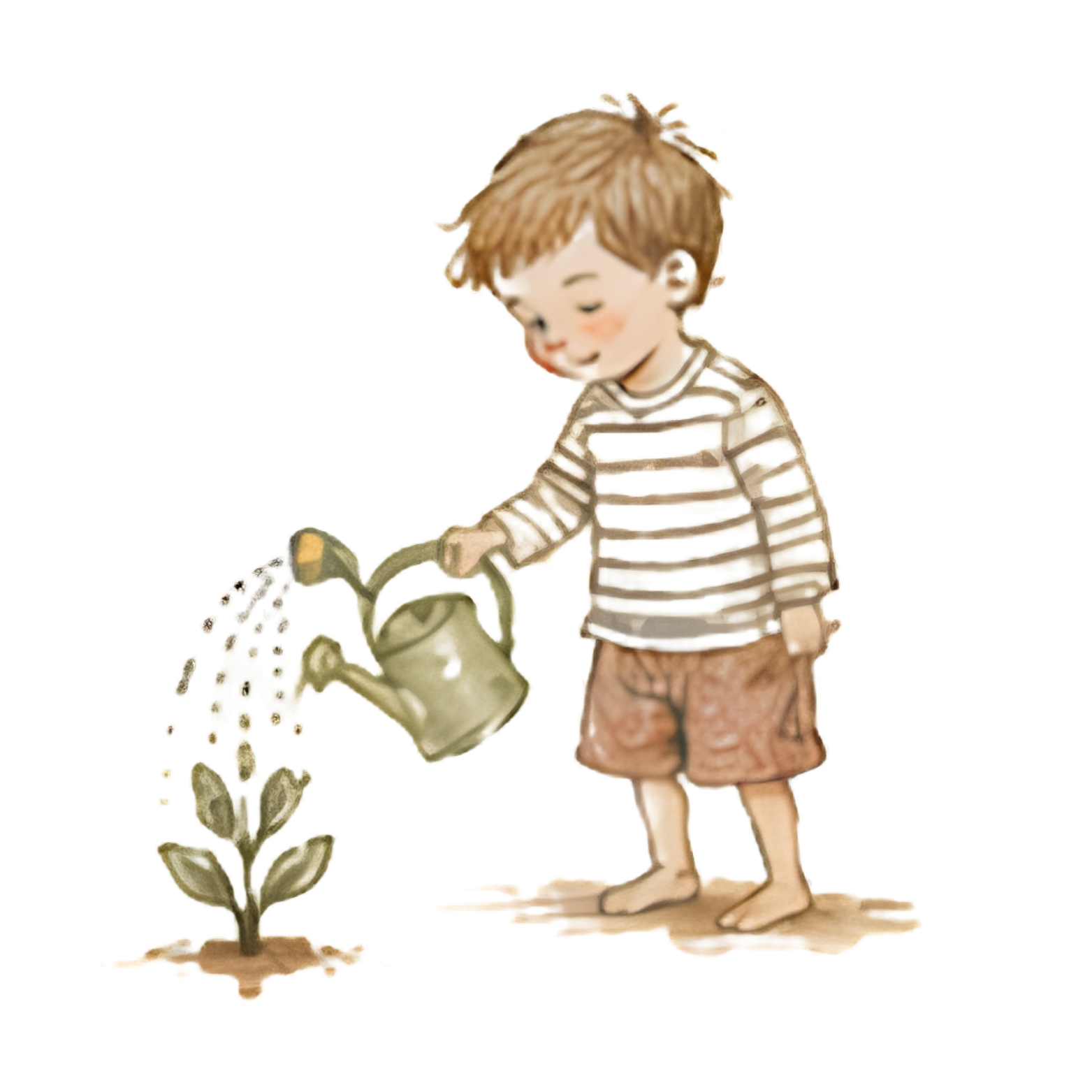
Sometimes I say: "This is called a cylinder." "This sound is /m/." "The scissors are held here." "The plant needs a small amount of water."
That is information. I do not need to act as though the child personally disappointed me by not already knowing it. They are learning. Of course they do not know everything.
The prepared adult gives correct information while protecting the child's willingness to continue learning. That balance matters.
What If the Child Keeps Doing It Wrong?
First, I would try to remove the word "wrong" for a moment and observe specifically.
What is happening? Which step is difficult? When does the error occur? Does the child understand the purpose? Have I actually shown the task? Is the tool appropriate? Is the child ready? Is there too much going on in the environment? Are they rushing? Are they tired? Are they seeking a reaction? Is the activity simply beyond their current ability?
"Doing it wrong" gives me very little information. "The child consistently turns the pitcher before it is above the glass" gives me something to work with.
Now I know what I observed. Maybe I give another presentation. Maybe I isolate that movement. Maybe I change the amount of water. Maybe I offer a different pitcher. Maybe I wait.
The same visible error can have different reasons. This is why repeating "No, that's wrong," may not change anything. The child probably already knows the adult is dissatisfied. They may still not know what to do differently.
Our job is to understand the point of difficulty. That requires more observation than correction.
Do Not Correct Every Social Interaction From Across the Room
A child says: "Move." From across the room: "Say excuse me!" The child says: "Give me that." "Say please!" The child takes something. "Ask nicely!"
We are remotely operating the child's social life.
Sometimes children need language. Absolutely. But I also want to observe the interaction. What does the other child do? Does the child notice? Can they repair? Is this a pattern?
Sometimes I move closer. Now I can actually see what is happening. Maybe I say: "You want space. You can say, 'Please move back.'" I give language connected to the child's need.
That is different from shouting "Use your words!" from twelve feet away. Which words? English contains many. Be specific.
Young children are learning how to live with other people. That is complicated work. They may need models. They may need limits. They may need adults to intervene. But I do not want children to become dependent on an adult referee narrating every social exchange.
Repair Matters More Than Pretending We Never Overcorrect
You will correct your child unnecessarily. I will interrupt a child at the wrong time. We will say: "No, not like that." Then immediately think: Why did I say that?
Welcome to adulthood.
The goal is not perfect Montessori language every minute. Sometimes you realize you took over. You can give the work back. "I'm sorry. I helped before you asked. You can continue."
Sometimes you react strongly to a spill. You can repair. "I was frustrated and I spoke very loudly. The water spilled. We can clean it."
Children learn from repair too.
What matters is whether we are willing to notice our patterns. Am I constantly correcting this child? Do I give one sibling more space than another? Do I assume a child needs help before they begin? Do I become anxious when something is not done perfectly? Do I correct more when other adults are watching?
That last question. Very interesting. Sometimes we correct children because we feel observed. We want the other adult to know: I saw the behavior. I am parenting. Please note that I have responded.
The child becomes part of our performance. I have to be honest about that too.
So, Should You Correct Your Child?
Yes. Sometimes.
Children need accurate information. They need limits. They need guidance. They need adults to intervene when something is unsafe or harmful. They need presentations and models.
Sometimes they need us to say: "That is not how this tool is used. Let me show you." Sometimes they need: "The word is 'went.'" Sometimes they need: "I will not let you hit." Sometimes they need: "Your shoes are on opposite feet."
This is normal.
The question is what happens before the correction. Did I observe? Did the child have a chance to notice? Is the error giving them information? Is concentration happening? Is this a safety concern? Does the child need a correction or a presentation? Am I correcting the child's work because it is actually a problem, or because it does not match my preference? Could I model instead? Could I wait? Could I give the information more respectfully?
That pause changes things. Not every time. Sometimes you are going to shout "STOP!" because a child is about to do something deeply concerning with a garden tool. Safety first. Montessori reflection later.
But in ordinary moments, we can slow ourselves down. The spilled water. The backward shoe. The mispronounced word. The puzzle piece. The strangely folded towel. The drawing with the anatomically surprising person.
Do I need to enter this moment? Maybe. Maybe not.
My Honest Take on Correction
I think adults correct children because we care. We want to help. We know things the child does not know yet. We can see the easier path. The safer path. The more efficient path. We want the child to succeed.
But sometimes our desire to help the child succeed makes it difficult for the child to experience the process of figuring something out.
That is what I keep returning to. The process. Not only: Did the shoes end up on the correct feet? But: What did the child notice? What did they try? What did their body tell them? Did they ask for help? Did they persist? Did they have an opportunity to think?
Sometimes I correct. Sometimes I teach. Sometimes I model the correct language and continue the conversation. Sometimes I give another presentation tomorrow. Sometimes I intervene immediately.
And sometimes I sit on my hands. Not metaphorically. I genuinely think Montessori adults should discuss how often we physically put our hands somewhere so we do not take over a child's work.
The child is trying. My hands have ideas. They need boundaries.
I am learning too. I am learning that silence does not mean I am failing to teach. Waiting does not mean I do not care. Allowing a small mistake does not mean I have lowered my expectations.
Sometimes the child needs information. Sometimes the child needs me. And sometimes the child needs the opportunity to meet the problem before they meet my solution.
That is the question I try to ask before I correct: Does the child need my answer right now?
I will not always get it right. But I can pause long enough to ask.
Sometimes, in that pause, the child answers for me. They look at the shoe. They take it off. They switch feet. And continue with their day. Without me saying a word.
Very rude. I had an entire lesson prepared.
But also? Exactly what I was hoping for.