
How to Prepare Your Child During the Summer
June 15, 2026 · Practical Life
Summer arrives and, almost immediately, adults start thinking about September.
I understand.
The school year ends, routines change, and suddenly there are weeks of open time in front of us. Parents naturally begin wondering whether their child will forget everything they learned.
Should we practice letters? Should we work on numbers? Do we need worksheets? Is there a summer workbook? Should I create a learning schedule?
And somewhere online, a parent has already built a color-coded eight-week academic summer plan for their three-year-old.
Please close the spreadsheet.
At least for a moment.
When I think about preparing a young child during the summer, academics are not the first thing that come to mind.
I think about independence. Movement. Language. Routine. Responsibility. Time.
I think about all the small abilities children need in order to move confidently through their day.
Because being prepared for school is about much more than knowing letters and numbers.
Summer Does Not Need to Become School at Home
I want to start here.
Your home does not need to become a classroom for the summer.
You do not need to recreate Montessori shelves in every room, give formal presentations from 9:00 to 11:30, and begin referring to yourself as the summer guide.
You are allowed to be a parent.
Actually, please be a parent.
Children benefit from school, and children benefit from home. Those environments do not have to become identical in order to support each other.
Summer can be slower.
There can be travel. Late mornings. Family visits. Days when absolutely nothing productive appears to happen.
That is okay.
Preparation does not mean filling every hour with an educational activity.
Sometimes the most useful thing you can do is look at your child's daily life and ask:
What opportunities do they have to participate?
That question can lead to more meaningful preparation than a packet of worksheets.
Start With Independence
If your child is entering school or returning after summer, one of the best areas to focus on is independence.
Not reading. Not writing. Not memorizing the alphabet backward.
Daily life.
Can your child begin putting on their own shoes? Can they pull their pants up and down? Can they wash and dry their hands? Can they open part of their lunch? Can they carry their own bag? Can they recognize some of their belongings? Can they ask for help?
These skills matter.
Imagine being a young child in a classroom.
You need to use the bathroom. Your pants are difficult to manage. Your shoe comes off. Your water bottle will not open. You need something, but you do not know how to tell the adult.
That is a lot.
Now imagine the same child has had months of opportunities to practice parts of those routines.
They may still need help. That is completely normal.
But they have some experience. Some confidence. Some understanding of what their body and hands can do.
Summer gives us time to practice without the same morning rush.
That is valuable.
Let Them Dress Themselves
I know.
This can be painful.
You are watching your child put one leg into their pants. The leg comes out. They turn the pants around. Now both legs are in the same opening. They remove the pants entirely. For some reason, the shirt has also come off.
You are ten minutes into a process you could complete in twelve seconds.
Welcome to independence.
Summer can be a wonderful time to allow more space for dressing because we may not always be racing out the door for school.
Choose clothing that the child can realistically manage.
Elastic waistbands can be easier than complicated buttons. Simple shoes may allow more independence than shoes requiring a degree in mechanical engineering.
You can still help.
Independence is not abandoning the child in front of a pile of clothing and wishing them luck.
Maybe you hold the shirt and the child puts their arms through. Maybe you help begin the zipper and they pull it up. Maybe they put on the pants and you help with the button.
The question is not:
Can my child dress completely independently?
Ask:
Which part can they begin doing?
Then give them opportunities to do that part.
Again. And again.
You may be surprised by what changes over one summer.
Practice Bathroom Independence Without Pressure
Bathroom routines can be a big source of anxiety for both children and parents.
If your child is using the toilet independently or moving toward more independence, summer may give you time to slow down and look at the entire routine.
Can the child manage their clothing? Can they sit comfortably? Can they wipe with the level of support appropriate for their age? Can they flush? Can they wash their hands? Can they reach soap and a towel?
Sometimes adults focus entirely on whether the child uses the toilet.
That matters.
But there are several steps around the actual toilet that the child also needs to understand.
Show these steps slowly. Use the same general routine. Allow practice.
And please try not to turn the bathroom into a place of performance.
Children feel pressure.
If every bathroom visit involves five adults asking whether something happened, I would also become uncomfortable.
Support the routine. Observe. Help where needed.
If you have specific toileting or developmental concerns, speak with your child's pediatrician or another appropriate professional.
But for many children, simple familiarity with the sequence can build confidence.
Let Your Child Carry Their Own Things
Children own many objects that adults somehow become responsible for carrying.
The child's backpack. The child's water bottle. The child's jacket. The child's mysterious stick they absolutely needed to bring on the walk.
And now the adult is carrying all of it.
Sometimes we automatically take things from children because it is faster.
Sometimes the child hands us something and we accept it without thinking.
This summer, notice.
Can your child carry their own small backpack? Can they bring their water bottle from the car? Can they carry their towel after swimming? Can they put their shoes in the appropriate place when they come home?
The item should obviously be manageable for the child's body.
I am not suggesting your three-year-old carry the family cooler through the airport.
But responsibility for personal belongings can begin very simply.
"You can carry your water bottle."
"Your shoes go in the basket."
"Please bring your hat."
These experiences help the child build awareness of their own things.
Will they forget something? Yes. Adults forget things. I have searched for my phone while holding my phone.
The goal is not perfection.
The goal is participation.
Give Your Child Real Jobs at Home
Children want to participate in life.
Sometimes we make children's lives very separate from adult life.
Adults cook. Adults clean. Adults organize.
Children play with a toy kitchen where they pretend to cook and clean.
Interesting.
What happens if we invite them into the real activity?
Summer can be a wonderful time to give children simple responsibilities at home.
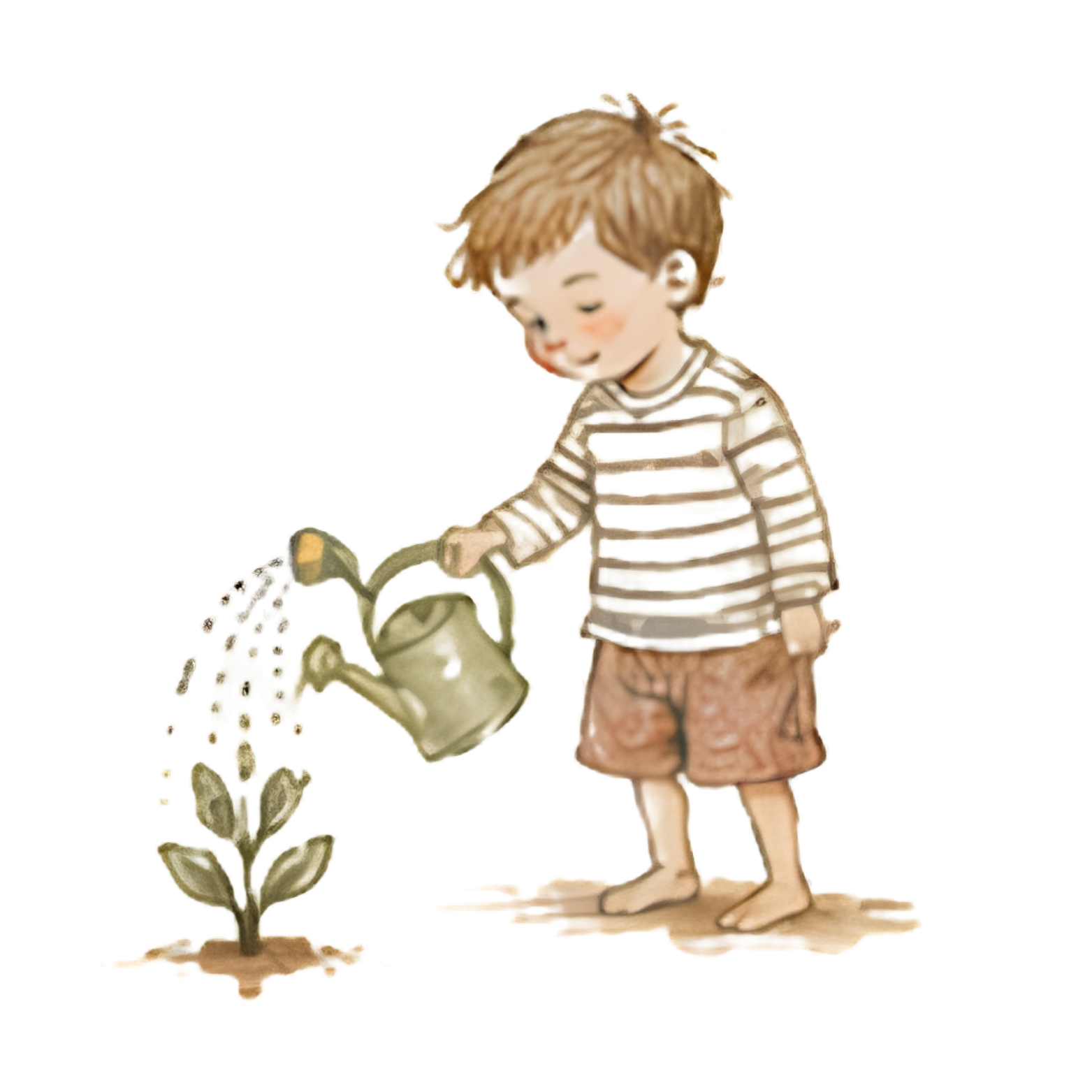
Carry napkins to the table. Wash fruit. Tear lettuce. Water a plant. Match socks. Put dirty clothes in a basket. Wipe a small spill. Feed a pet with appropriate supervision. Help pack a snack.
These are not fake activities designed to secretly teach math.
They are real contributions.
The napkins actually need to reach the table. The plant actually needs water. The clothes actually need to go into the basket.
Purpose matters.
Children often know when an activity has real meaning.
There is a different feeling when the child understands:
My work contributes to what is happening here.
That sense of belonging prepares children for community.
A classroom is a community too.
Stop Doing Every Small Task for Them
I say this with love.
Watch your hands.
Your child's snack will not open immediately. Your hand moves.
The shoe is difficult. Your hand moves.
They spill water. Your hand moves.
They drop a napkin. Your hand moves.
We are very active.
Sometimes supporting a child during the summer simply means pausing before we help.
Not forever. Just long enough to see what the child does.
They may try again. They may change their approach. They may look for a tool. They may ask for help.
All of that gives you information.
I think adults are often afraid that watching a child struggle means we are being unhelpful.
But there is a difference between productive struggle and distress.
A child working seriously to open a container for fifteen seconds may not need rescue.
A child becoming increasingly frustrated and no longer able to engage may need support.
Observation helps us tell the difference.
Sometimes I ask:
"Would you like help?"
The child says no.
Okay.
My hands return to me.
Very difficult.
Sometimes they say yes.
Then I can help with the part they need.
Maybe I loosen the lid and give it back. The child completes the final movement.
Small adjustments in how we help can create more participation.
Read, But Please Do Not Turn Every Book Into a Quiz
Read during the summer.
Read often.
Read books your child chooses.
Read the same book seventeen times if that is where life has taken you.
Talk about the pictures. Laugh. Notice language. Tell stories.
Let your child interrupt with completely unrelated information about a truck they saw six weeks ago.
This is part of language.
What I would try to avoid is turning every reading experience into an assessment.
"What letter is this?"
"What sound does this make?"
"What color is that?"
"How many ducks?"
"What happened on the last page?"
The child was trying to enjoy a story.
Suddenly, the book has become a job interview.
Questions can absolutely be part of conversation.
But observe how often you are checking for correct answers.
Sometimes we read because stories are wonderful.
Sometimes we talk because conversation is meaningful.
Language develops inside relationships too.
Tell your child about your day. Ask what they noticed. Listen to their stories even when the story has no clear beginning, middle, or end.
Sometimes the story is just:
"And then the dog. And the big truck. And I was there. Yesterday. But not yesterday."
Stay with them.
They are organizing language.
You do not need a flashcard to support that.
Speak to Your Child Normally
Children benefit from rich language.
This does not mean you need to speak like you are narrating a documentary.
"The juvenile human is now approaching the kitchen environment."
Just talk.
Name real objects. Use specific words. Explain things when it makes sense.
If you are cutting a peach, you can say peach. Pit. Slice. Juicy. Ripe.
Language exists everywhere.
Sometimes adults simplify language so much that everything becomes:
Thing. This. That. Look. Nice.
Children are capable of hearing real words.
You do not need to demand that they repeat every word.
Simply offer language.
Conversation during ordinary life is powerful.
In the car. At the store. While cooking. During a walk.
"What did you hear?"
"That truck is reversing."
"The peaches feel soft."
"We need three plates."
This is not a formal lesson.
It is life with language inside it.
Let Your Child Be Bored Sometimes
I know this is controversial.
Boredom arrives and adults panic.
"What should we do?"
We find an activity. Turn something on. Bring out a craft. Create a sensory bin. Schedule an experience.
Sometimes a child says, "I'm bored," and the adult behaves as though a small emergency has occurred.
What if we wait?
Not every moment needs to be filled.
Children need opportunities to decide what to do with themselves.
This can be uncomfortable at first.
A child who is used to constant entertainment may not immediately develop a beautiful independent project after three minutes of boredom.
They may follow you around.
"I'M BORED."
"I hear you."
"WHAT CAN I DO?"
"You'll think of something."
"WHAT?"
I do not know.
That is part of the problem.
The child is learning to respond to open time.
This does not mean children need zero structure.
Young children benefit from rhythm and predictable routines.
But inside the day, there can be space.
Space to look. Choose. Start something. Stop. Return. Invent. Observe.
Sometimes adults interrupt this process before it begins because we cannot tolerate the empty space.
Summer can give children more of it.
Protect Time for Movement
Young children need to move.
A lot.
Running. Climbing. Carrying. Pushing. Pulling. Balancing. Walking. Using their whole body.
Sometimes we become very focused on preparing children academically while ignoring the body that is carrying them into the classroom.
Movement supports the child's developing coordination and awareness.
During the summer, go outside when possible.
Walk. Visit a playground. Let children climb appropriate structures. Carry small objects. Dig. Help in a garden. Kick a ball. Move through different environments.
The goal does not need to be athletic achievement.
We are not scouting the three-year-old for professional sports.
The child is learning their body.
How far can I reach? How much force do I need? Can I balance here? Can I carry this? What happens when the ground changes?
Movement gives information.
And after meaningful movement, many children are also more available for calm activity.
I understand this personally.
I am much more peaceful after I have moved too.
Keep Some Kind of Daily Rhythm
Summer routines do not need to match the school schedule exactly.
You do not need to sound a bell at 8:30 and begin a three-hour work cycle in your living room.
But children often benefit from some predictability.
Wake up. Get dressed. Breakfast. Go out. Lunch. Rest. Family time. Bed.
Your family's rhythm will look different.
That is fine.
The point is that completely unpredictable days can sometimes make transitions harder for young children.
If bedtime changes by four hours every night and meals happen randomly, returning to a school routine may feel like a very large adjustment.
Summer can be flexible without becoming completely chaotic.
I think of rhythm differently from a strict schedule.
A strict schedule says:
At 9:17, we do this.
A rhythm says:
After breakfast, we usually get ready for the day. Before bed, we usually follow the same general sequence.
Children begin to know what comes next.
This can support independence because the adult does not always need to provide the next instruction.
The routine itself gives information.
Let Bedtime Become Predictable
I know.
No one wants to discuss bedtime during summer.
The sun is still out. There are family events. Travel happens. Your child somehow becomes extremely energetic at 9:43 p.m.
I understand.
But if your child will need to return to an earlier school schedule, please do not wait until the night before school to completely change bedtime.
That is difficult for everyone.
Adults included.
If bedtime has shifted significantly, begin moving toward your school-year rhythm gradually.
Bring back predictable steps.
Bath. Pajamas. Teeth. Book. Bed.
Whatever works in your home.
A consistent sequence can help the child know what comes next.
And this is another opportunity for independence.
Can the child get their pajamas? Put dirty clothes away? Brush with support? Choose a book? Turn off a light?
Small responsibilities inside a routine can make the routine feel more familiar and manageable.
Practice Separation Through Trust, Not Fear
If your child is beginning school for the first time, separation may be on your mind.
Parents often ask how to prepare children emotionally.
My first thought is:
Be careful about the story you create around school.
Adults sometimes say:
"Are you scared?"
"You're going to miss Mommy so much."
"Don't worry. I promise I'll come back."
"Are you nervous?"
The adult means well.
But we may be introducing an entire emotional script before the child has shown us they need it.
You can talk about school simply.
"You will go to school. Your teacher will be there. I will come back after school."
Read books about school. Visit the school when appropriate. Talk about the routine. Answer questions honestly.
Try not to make enormous promises.
"You're going to LOVE it!"
Maybe.
Maybe the child will cry for the first week.
Now what?
You lied.
Instead, we can communicate confidence.
"This is new."
"Your teacher will help you."
"I will come back."
"You may feel sad. I will still come back."
The child may have strong feelings.
That does not automatically mean something is wrong.
We can respect the emotion without teaching the child that separation is dangerous.
And parents, I say this gently:
Your body communicates too.
If you are crying, clinging, returning to the door four times, and saying, "I'm fine," the child may have questions.
Very reasonable questions.
You can have feelings.
Of course.
Maybe save the full emotional release for the car.
That is a sacred parenting space.
Do Not Use School as a Threat
Please do not say:
"Your teacher won't let you do that."
"Just wait until school starts."
"They're not going to help you at school."
"You need to behave or your teacher is going to be upset."
Now school sounds incredible.
Cannot imagine why the child is hesitant.
The school and teacher should not become mysterious punishment figures used to control behavior during the summer.
If your child struggles to put on shoes, you do not need to say:
"No one's going to put them on for you at school."
Maybe someone will help.
We support children.
Instead, say:
"You are learning to put on your shoes. Let's practice."
The focus returns to the skill.
School is a community the child is joining.
We want to build a relationship based on trust.
Not:
Wait until the Guide hears about this.
Please leave me out of your dinner conflict.
I was not there.
Help Your Child Learn to Ask for Help
This is one of the most practical skills you can support.
Children do not always know how to communicate what they need.
A child may stand beside an adult.
Silently.
For a very long time.
Eventually the adult notices.
"Do you need something?"
The child nods.
"What do you need?"
Silence.
We are working on it.
At home, you can give language.
"Can you help me?"
"I need help opening this."
"I need to use the bathroom."
"I don't understand."
"I am hurt."
"Please stop."
The goal is not to make children memorize scripts.
We are giving them language they may be able to use when a need arises.
If your child whines or simply hands you an object, pause when appropriate.
"You need help opening it. You can say, 'Can you help me?'"
Then help.
We do not need to withhold assistance until the child performs the perfect sentence.
Language is developing.
Model the words.
Over time, the child may use them independently.
Being able to seek help is part of being independent.
Let Them Finish Small Tasks
Children are often interrupted.
They begin something.
"Time to go."
They start cleaning.
"It's okay, I'll do it."
They carry something.
"Give it to me."
Sometimes interruption is unavoidable.
Life happens.
But when possible, allow the child to complete a small process.
They carry the plate all the way to the table. They finish wiping the spill. They put the last shoe in the basket. They zip the bag.
Completion gives the child an experience of sequence.
I began. I worked. I finished.
This is one reason routines and Practical Life experiences can be so valuable.
The child begins to understand work as a process.
During the summer, we may have more opportunities to protect these small moments.
It might take an extra minute.
Sometimes an extra seven.
But the child is building something.
You Do Not Need to Teach Next Year's Curriculum
Please hear me.
You do not need to secretly teach your child everything they will learn next year so they can arrive "ahead."
This is especially difficult in a world where parents are constantly comparing development.
Someone else's child is reading. Someone is doing multiplication. There is probably a four-year-old online explaining compound interest.
Good for them.
Your child does not need to arrive at school knowing everything.
That would make school very strange.
Preparation is not pre-teaching every lesson.
I would rather see a child enter the environment with growing independence, curiosity, confidence using their body, an ability to communicate needs, and some experience caring for themselves and their surroundings.
We can work with that.
The academic materials are there. The presentations are there. The guide is there.
Let the child have somewhere to grow.
A Simple Summer Day Can Be Enough
Sometimes parents ask for specific Montessori activities to do during summer.
Here is one possible day.
Your child wakes up and helps choose clothing.
They dress with the level of support they need.
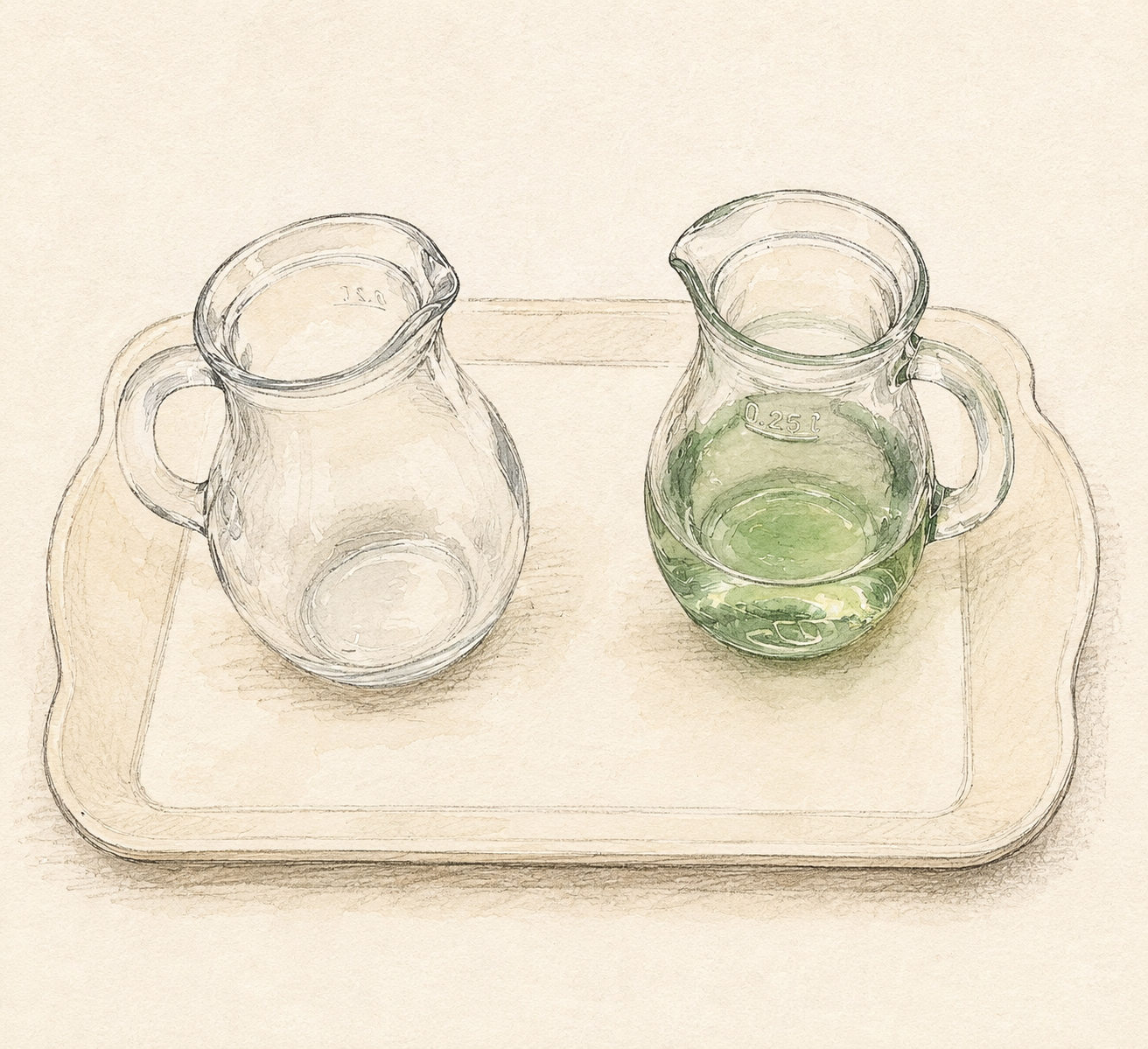
At breakfast, they carry a napkin to the table and pour water from a small pitcher.
A little water spills.
They get a cloth.
After breakfast, you take a walk.
You notice a construction vehicle.
Your child talks about it for the next forty-eight minutes.
Language.
You visit a playground.
Movement.
At home, the child helps wash strawberries.
They eat seven strawberries during the process.
Quality control.
They rest.
Later, they look at books.
Maybe you read together.
Maybe the child plays.
At dinner, they carry something to the table.
Before bed, they help put dirty clothes away, brush their teeth, and choose a story.
Was there a worksheet? No.
Did development stop? Also no.
The child moved. Spoke. Listened. Carried. Chose. Participated. Practiced independence. Solved small problems. Experienced a routine.
That is a full day.
My Honest Take on Summer Preparation
I think adults are afraid of children losing time.
Summer feels like a gap. A pause. Three months when we are supposed to make sure development continues moving visibly forward.
But children do not stop developing because school is closed.
They are still absorbing. Moving. Watching. Talking. Testing. Repeating. Growing.
The question is what experiences their environment offers them.
You do not need to make every experience educational.
Actually, please do not announce every developmental benefit while the child is doing something.
"Excellent strawberry washing! This is developing fine motor coordination and executive functioning!"
The child is washing a strawberry.
Let them live.
We can understand the deeper purpose without making the child responsible for it.
This summer, I would focus less on getting your child ahead.
Look instead for opportunities to help them become more involved in their own life.
Let them carry. Let them try. Let them talk. Let them move. Let them be bored. Let them help. Let them make small choices. Give them time to finish. Show them where things belong. Create routines they can begin to understand.
And watch your hands.
How often are you stepping in? How often are you doing something the child might be ready to begin doing?
Sometimes the most meaningful summer preparation is not adding another activity.
It is removing a little unnecessary help.
The child may enter school without knowing every letter.
That is okay.
They may still need support.
That is okay too.
But maybe they walk into the classroom knowing:
I can try. I can participate. I can ask for help. I can take care of some of my things. I can do hard things slowly.
That is preparation.
And honestly?
I would take that over a completed summer workbook.