
Montessori Mythbusters: Why Your Child Isn't Behind
May 1, 2026
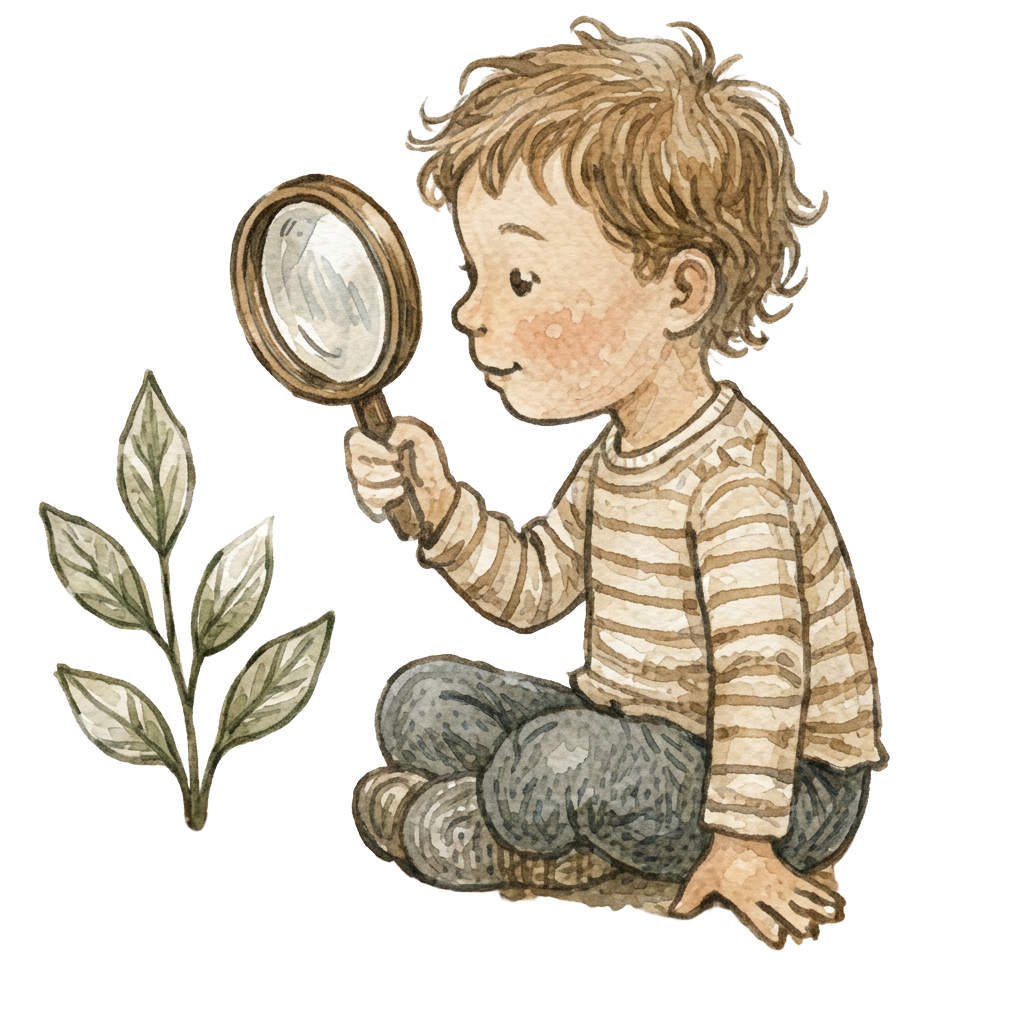
Someone else's child is reading.
Your friend's four-year-old can count to one hundred. A child at school is already writing their name, and your cousin just casually mentioned that her toddler has been independently preparing a three-course breakfast since eighteen months.
Okay.
Maybe not the breakfast.
But you know the feeling.
You see another child do something your child is not doing yet, and suddenly a small thought enters your mind.
Are they behind?
Then the thought gets louder.
Should they know this already? Did I miss something? Do we need more practice? Should I buy flashcards? Is there an app? Did I not read enough books during pregnancy?
And before you know it, you are comparing two entire human beings based on the fact that one of them recognized the letter M first.
I understand the concern.
When you care deeply about a child, you want to know they are okay. You want to give them what they need, and you do not want to look back one day and wonder whether you missed an important sign.
But I think we need to talk about the word behind.
Because childhood is not a straight line.
And children are not running the same race.
Behind Whom?
This is usually the first question I want to ask.
When you say a child is behind, who are we comparing them to?
A sibling? A classmate? A cousin? A child you saw online for thirty-seven seconds? A developmental chart?
Comparison can sometimes give us useful information. There are real developmental concerns that deserve attention, and I am not suggesting that parents or teachers ignore them.
But comparison can also become very noisy.
You see one child reading and do not see the hundreds of times they asked someone to read the same book.
You see a child confidently speaking in a group and do not know that they barely spoke at school six months ago.
You see the finished skill.
You do not always see the development that came before it.
That matters.
Because when we compare children, we often compare one child's visible strength with another child's work in progress.
That is not a particularly fair comparison.
Development Does Not Happen in a Perfect Order
Adults love sequences.
First this. Then this. By this age, this. Check the box. Move to the next box.
There is something comforting about knowing exactly what should happen and when. If development worked like an IKEA instruction manual, I think many adults would feel much calmer.
Step 1: Language. Step 2: Fine motor. Step 3: Emotional regulation. Step 4: Congratulations. Your child is complete.
Unfortunately, children did not read the manual.
One child may have incredibly advanced language and still need a great deal of support controlling their movements.
Another child may spend long periods concentrating with their hands but speak less than the children around them.
One child may recognize letters early.
Another may be completely uninterested in letters but notices every tiny change in their physical environment.
Development is happening across many areas at once, and it does not always move forward at the same speed.
Sometimes one area seems to explode.
Sometimes another moves quietly.
Sometimes we do not notice the preparation until the skill suddenly appears.
Montessori has taught me to respect that invisible work.
There Is Work Before the Skill
Think about writing.
Adults see a child write their name and think:
They learned to write.
But the story did not begin with the pencil touching the paper.
The hand was developing before that.
The child carried objects. They transferred. They poured. They used their fingers. They coordinated movements and refined their grip.
They developed language.
They heard sounds.
They noticed symbols.
They practiced controlling their body long enough to sit with an activity.
There was work before the writing.
This idea comes up again and again in Montessori. We sometimes call it indirect preparation.
The child may be developing abilities they will need later while doing something that appears completely unrelated to the adult watching.
This is why I hesitate when someone looks at a child and says:
"They aren't doing anything academic."
What do you mean by academic?
The child who is carefully transferring water without spilling is developing control of movement and concentration.
The child repeating a sound game is building awareness of language.
The child arranging objects in order is developing an understanding of sequence.
The child trying to button their own coat is working through a problem with their hands.
Not all preparation announces where it is going.
Sometimes development is quiet.
We Are Very Focused on What We Can Measure
Can they count? Can they read? Can they write their name? How many letters do they know?
These questions are easy to ask because the answers feel clear.
Seven letters. Counts to twenty. Reads three-letter words. Excellent. Put it in a spreadsheet.
And listen, I love information. Observation and record keeping are important parts of understanding a child.
But some of the most significant development is much harder to put into a neat box.
Can the child persist when something is difficult?
Can they wait?
Can they choose work?
Can they recognize when they need help?
Can they move through frustration without immediately giving up?
Can they care for something?
Can they work without an adult constantly entertaining them?
Can they recover after making a mistake?
These things develop too.
Sometimes a parent is worried because their child cannot read yet, and I am watching the same child work through a difficult activity for twenty minutes without giving up.
I am thinking:
Do you see what I am seeing?
That concentration matters.
That persistence matters.
The ability to stay with difficulty matters.
Reading matters too.
But development is bigger than the skill we happen to be measuring today.
"But All the Other Children Are Doing It"
Maybe.
Sometimes that is true.
There may be a classroom where many children are working with a particular material or developing a similar skill and one child is not there yet.
That is information.
We observe it.
What I do not want to do is immediately turn that information into a judgment about the child.
There is a difference between saying:
"I have noticed this child is not yet doing X."
And:
"This child is behind."
The first statement describes an observation.
The second can very quickly become an identity.
Once we decide a child is "behind," it can change the way adults look at them.
We offer help faster. We lower our expectations in some areas. We push harder in others. We begin watching for everything they cannot do.
Sometimes the child starts to notice.
Adults are not as subtle as we think we are.
Our faces have subtitles.
The child feels our urgency.
And now the skill is carrying something else with it.
Pressure.
The Child Can Feel When We Are Rushing Them
Imagine someone standing behind you while you are trying to learn something difficult.
They keep checking.
"Do you know it now?"
No.
"Now?"
Still no.
"Your brother knew this already."
Wonderful. Thank you.
"Let's practice again."
At some point, you may no longer be thinking about the skill.
You are thinking about the person watching you.
Children can experience this too.
When adults become anxious about development, we often add more.
More practice. More questions. More corrections. More activities designed to target the exact skill we are worried about.
Sometimes support is absolutely needed.
But sometimes the child needs us to stop turning their development into an emergency.
I have to ask myself:
Am I helping the child, or am I trying to calm my own anxiety?
I do not always love the answer.
Montessori Does Not Mean "Just Wait Forever"
This is an important distinction.
I do not want anyone to leave this blog thinking Montessori means we ignore developmental concerns and say:
"Follow the child."
Then we light a candle and wait until age fourteen.
No.
Observation has a purpose.
A Montessori guide watches carefully because we want to understand development. We notice patterns, changes, struggles, interests, movement, language, social development, and the child's relationship with the environment.
If I have a genuine concern, I document what I am seeing.
I talk with the child's family.
I listen to their observations.
We may discuss additional evaluation or support when appropriate.
Early support can matter.
Saying "children develop differently" should never become an excuse to dismiss a parent who knows something does not feel right.
But the opposite is also true.
Not every difference is a delay.
Not every later skill is a crisis.
Not every child who develops differently from their classmate is behind.
The work is learning to observe without immediately panicking.
Very easy.
I am sure all adults are naturally excellent at this.
Readiness Matters
One of the things I appreciate about Montessori is the attention we give to readiness.
We observe before presenting.
At least, we are supposed to.
The question is not only:
How old is this child?
We are also asking:
What have I observed? What experiences have they had? What are they repeating? Where is their attention going? What seems to be emerging? What prerequisite abilities are already present?
This does not mean a child controls every part of their education based on their mood that morning.
"I have observed that I am not ready for math until next December."
Nice try.
The adult still has responsibility.
We know the materials. We understand development. We connect the child to the environment.
But there is a difference between guiding development and dragging a child toward a skill because another child got there first.
Readiness matters because learning is not simply information being delivered.
The child is part of the process.
Earlier Does Not Automatically Mean Better
I think our culture struggles with this.
Earlier feels impressive.
Reading at three. Multiplication at five. A six-month-old with a LinkedIn profile.
We like early achievement because it looks like evidence.
Look. The child is ahead.
But ahead toward what?
That is a genuine question.
If a child reads earlier than another child, they read earlier.
That is the information we have.
It does not automatically tell us who will love reading more at twelve. It does not tell us who will write better at twenty. It does not tell us who is more intelligent, creative, curious, capable, or worthy.
It tells us when a particular visible skill emerged.
Sometimes adults add an entire story to that.
Early becomes gifted. Later becomes struggling.
And children are much more complicated than the stories we quickly create about them.
I want to be careful.
Because when we celebrate being "ahead," we quietly create the possibility of being "behind."
It is the same race.
Just a different position.
Maybe the child never agreed to race.
Repetition Can Look Like a Lack of Progress
I have watched children choose the same work again and again.
The adult part of my brain occasionally wants to say:
You know we have other materials, correct? Beautiful materials. Very expensive training. Would you like to look slightly to the left?
But repetition is important.
The child may be refining something I cannot immediately see.
Their movements become more precise. The sequence becomes more organized. Their concentration deepens. Their confidence changes.
From the outside, it can look like the child is doing the same thing.
The child may not be having the same experience.
This is another reason I am cautious about rushing children toward the next visible skill.
Adults love the next thing.
Children sometimes need the same thing.
Again. Again. Again.
And then one day, they move on.
Usually right after I finally created an extension for the work they have repeated for three weeks.
Of course.
Progress Is Not Always a Straight Line
Children sometimes do something once and then appear to forget it.
This makes adults nervous.
"But she did it last week!"
Yes.
She did.
And today she is looking at you like she has never seen a shoe before.
Development can be uneven.
A child may be using a skill confidently and then suddenly need more assistance.
There may be changes at home. A new sibling. Travel. Illness. A classroom transition. A period of rapid development somewhere else.
Sometimes the child is simply tired.
I forget how to perform basic tasks when I am tired too.
Please do not evaluate my maximum potential while I am looking for my phone and holding my phone.
A single moment does not tell us the whole story.
This is why observation happens over time.
We look for patterns.
Comparison Changes the Way We See the Child
This is the part I keep coming back to.
When I am constantly comparing a child, I stop seeing them clearly.
I see the space between them and someone else.
She cannot do what he does. He talks less than his sister did. She is not reading like the other children. He still needs help.
The comparison becomes the focus.
Meanwhile, what is the child actually showing me?
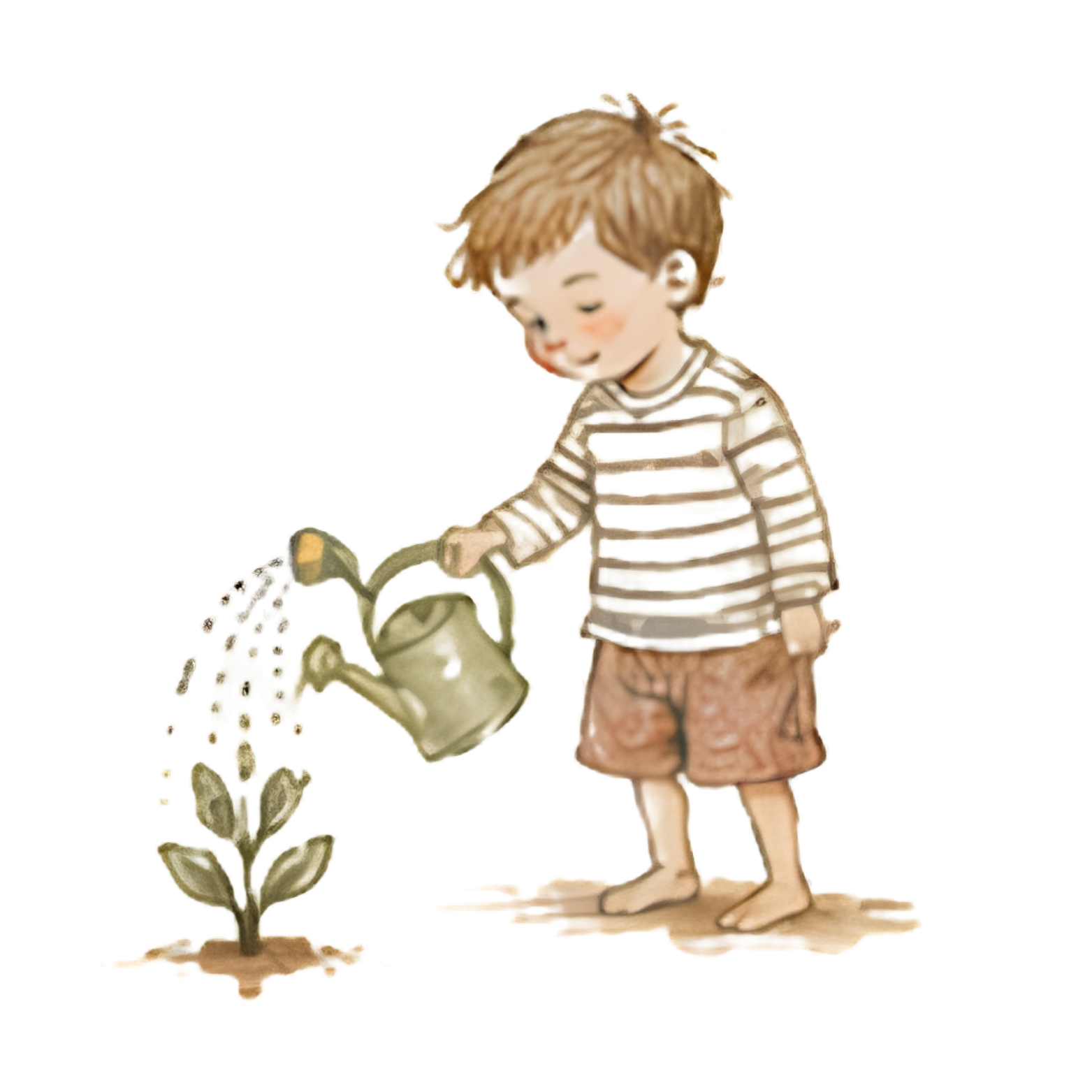
Maybe the child has developed an extraordinary ability to observe. Maybe they are careful. Maybe they are deeply social. Maybe they notice patterns. Maybe they have a wonderful sense of humor. Maybe they are persistent. Maybe they are cautious before attempting something new. Maybe their language is exploding quietly in two languages. Maybe they spend twenty minutes every morning making sure the classroom plants have exactly enough water.
These things do not cancel a developmental concern when one exists.
But the concern should not cancel the child either.
The child is still a whole person.
I never want one difficult area to become the lens through which I see everything they do.
Please Stop Testing Your Child at Home Every Five Minutes
I say this with love.
A parent becomes concerned about letters.
Suddenly every object in the house is an assessment.
"What letter does banana start with?"
The child is eating.
"B."
"What's this letter?"
The child is in the bathtub.
"M."
"What sound does S make?"
It is 6:14 in the morning.
Please.
There is a difference between playing with language and repeatedly checking whether a child knows something yet.
Children notice when every interaction has a correct answer hiding inside it.
Sometimes a child stops answering not because they do not know.
They are tired of the quiz.
If you are concerned about a skill, talk to the adults working with your child. Share what you are noticing and ask what they are seeing.
Then let your home continue to be a home.
Read together. Talk. Cook. Walk. Sing. Count real things when counting makes sense. Notice sounds. Invite participation.
The child's life does not need to become an endless exam.
Your Child Is Not a Progress Report
I think adults sometimes forget how often children are being evaluated.
Schools observe. Parents observe. Doctors ask questions. Family members make comments. Strangers at the grocery store apparently also have opinions.
"Isn't he talking yet?"
Thank you, Susan.
We were just trying to buy oranges.
Children are developing in front of an audience.
That is a vulnerable thing when you really think about it.
Imagine if every time you attended a family gathering someone announced:
"Oh. Neelay still hasn't learned Excel macros?"
I don't know why Excel was the example.
The point is, we would find that exhausting.
Children deserve adults who pay attention to development.
They also deserve relationships that are not completely organized around progress.
Sometimes I want to sit beside a child and enjoy who they are today.
Not constantly search for evidence of who they are becoming.
What Should Parents Actually Watch For?
Watch your child.
I know. Incredible Montessori advice.
But I mean really watch.
What do they choose when they have time? What frustrates them? What do they repeat? What do they avoid? How do they communicate when something is difficult? What movements seem challenging? What changes have you noticed over several months? What does the teacher see? What happens in different environments?
A child may behave completely differently at school and home.
Parents sometimes tell me:
"He never does that at home."
I believe you.
I also believe what I am observing at school.
Children respond to different environments, relationships, expectations, and group dynamics.
We need the whole picture.
That is why the relationship between the family and the guide matters so much.
We each see part of the child.
When we share honestly, we understand more.
When You Are Genuinely Concerned, Ask
Please ask.
I would much rather have an honest conversation with a parent than have them quietly worrying for six months because they are afraid of sounding dramatic.
Tell me what you are noticing.
Tell your child's teacher.
Talk with your pediatrician or an appropriate developmental professional when you have concerns.
Ask questions.
Real observation does not mean doing nothing.
And seeking support is not labeling a child as broken.
Sometimes a child needs additional support.
Support is not failure. A referral is not a punishment. An evaluation does not erase the child's strengths.
I think adults sometimes delay asking questions because they are afraid of what the answer might mean.
But information can help us prepare more thoughtfully for the child standing in front of us.
That is still the goal.
The child.
Not the label.
My Honest Take on Being "Behind"
I understand why parents use the word.
There are expectations. There are milestones. There are school systems that move at particular speeds. There are real developmental differences and real situations where children benefit from early intervention and specialized support.
I do not want to minimize any of that.
But I also think childhood has become incredibly competitive.
Sometimes without us admitting it.
We compare sleep. Words. Walking. Reading. Sports. Math. Social skills. College apparently begins around preschool now.
And the child is absorbing all of this.
The way we look at them. The urgency in our voices. The relief when they finally perform the skill we have been waiting for.
I want to be careful about the message underneath that urgency.
I was worried about you until you could do this.
That is not usually what the adult intends to communicate.
But children are always taking in more than our intentions.
The Child in Front of You
Montessori continually brings me back to observation.
Not comparison. Observation.
What is this child showing me? What is developing? Where are they finding concentration? What support do they need? What have I presented? What might I need to present differently? Is the environment supporting them? Am I interrupting? Am I helping too much? Am I expecting something the child has not been prepared for? Is there a pattern that genuinely concerns me?
These questions require more patience than simply deciding:
Ahead. On track. Behind.
Human development does not always fit neatly into three boxes.
And honestly, I am grateful for that.
Because the child in front of me is not an average child created from a developmental chart.
They have their own history. Their own experiences. Their own environment. Their own strengths. Their own challenges. Their own pace.
My job is not to stare constantly at the child beside them and calculate the distance.
My job is to see this child clearly.
Sometimes seeing clearly means recognizing a concern and helping a family find support.
Sometimes it means preparing a different experience.
Sometimes it means giving another presentation.
Sometimes it means stepping back.
And sometimes?
It means taking a breath and realizing the child is doing a tremendous amount of developmental work.
It just is not the work I was watching for.
Your child may not be doing what someone else's child is doing today.
That is information.
Observe it.
Stay curious.
Ask questions when you are concerned.
But please remember:
Development is not a race where every child leaves the same starting line, runs in the same lane, and reaches every marker at the exact same moment.
The child is becoming.
Our work is to pay attention.
Not to rush the story because we already read someone else's ending.