
Montessori Mythbusters: No, Montessori Isn't Just Wooden Toys
April 1, 2026
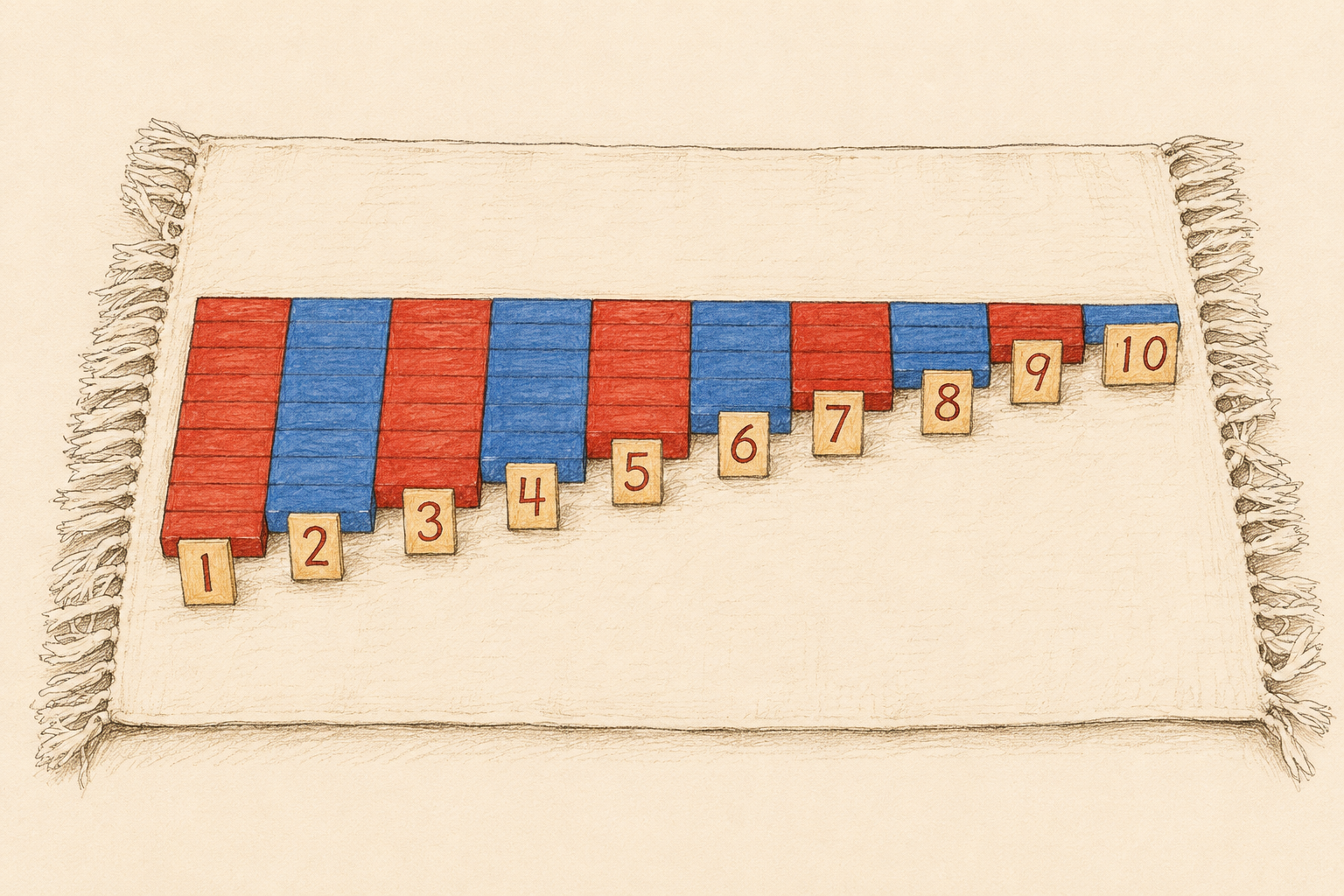
I need to say something.
Montessori is not a color palette.
There. We can continue.
Because somewhere along the way, Montessori became very beige. Wooden toys. Wicker baskets. Neutral rugs. A carefully placed plant. Maybe a rainbow, but the rainbow is somehow also beige.
And listen. I love a beautiful environment. I really do. Order matters. Simplicity matters. The materials we offer children matter.
But sometimes I scroll through social media and think: when did Montessori become an interior design style?
Because if I put twelve wooden toys on a low shelf, that does not automatically make my home Montessori. And if a toy is brightly colored? It has not been immediately rejected from the Montessori universe.
The conversation is a little deeper than wood versus plastic.
So let's talk about one of my favorite Montessori myths.
No, Montessori isn't just wooden toys.
Where Did the Wooden Toy Idea Come From?
To be fair, I understand the confusion.
Walk into many Montessori environments and you will see a lot of natural materials. Wood. Metal. Glass. Ceramic. Fabric. You will also see carefully organized shelves and materials that often have a simple, beautiful appearance.
AMI describes Montessori environments as intentionally arranged with accessible furniture, varied workspaces, and scientifically designed materials available for children's activity and exploration. The materials support concrete experiences that can lead toward both practical abilities and abstract understanding.
So yes. You will probably see wood.
But the wood is not the educational philosophy.
Maria Montessori did not look at a piece of oak and say: Perfect. The children are educated.
The material matters because of what the child is able to do with it. That is the part we sometimes miss.
A Wooden Toy Can Be Completely Un-Montessori
I said what I said.
Imagine I give a child a beautiful wooden toy. Handmade. Sustainably sourced. Painted with muted earth-tone colors. It looks incredible on the shelf. I take seventeen photographs of it.
But every time the child touches it, lights flash, a song plays, three pieces spin at once, and the toy announces the alphabet in four languages.
The fact that it is made of wood does not suddenly make the experience Montessori.
Now imagine something much simpler.
A child is holding a small glass pitcher. There is water inside. They carefully tilt their wrist. They watch the water move from one container into another. A little spills. They notice. They put the pitcher down. Get a sponge. Wipe the table. Try again.
What is happening? Coordination. Concentration. Control of movement. Problem solving. Independence. Care of the environment. Repetition.
The child receives information directly from the activity. No one has to shout: "Oops! Try again!" The water already told them.
That is a much more interesting Montessori conversation.
Montessori Materials Have a Purpose
One of the biggest differences between a Montessori material and a random toy is purpose.
The material is there for a reason. And I do not mean the reason printed on the side of the box. "Builds 37 essential STEM skills!" Okay. Which ones?
Montessori materials are carefully connected to particular developmental experiences and concepts. AMI describes the materials as supporting concrete exploration, followed by hands-on, self-directed, and often self-correcting learning.
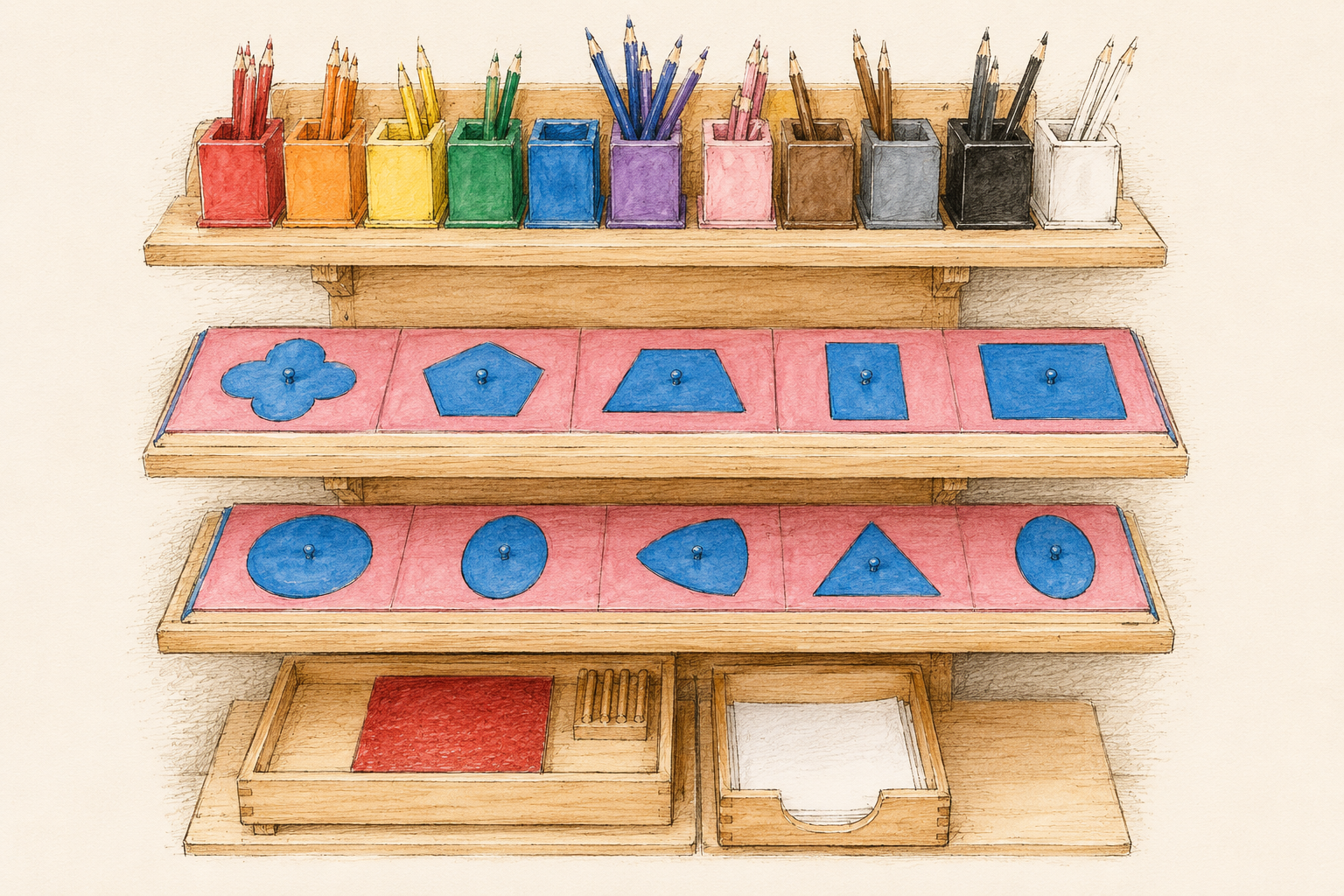
Take the Pink Tower. Yes. It is pink. Yes. It is a tower. Excellent observations.
But we do not place it on the shelf because the classroom desperately needed a pop of color.
The cubes vary systematically in dimension. The child handles them. Carries them. Compares them. Builds with them. Begins to visually discriminate differences in size. Coordinates movement. Works with order and sequence.
And maybe the tower falls. That part is important too. The child is receiving information from their experience.
The material is doing more than entertaining them. There is an intention behind it.
That does not mean children are never joyful while working. Anyone who has watched a child finally complete something after trying over and over knows how joyful work can be.
But the goal is not constant stimulation. The goal is not: how do I keep this child entertained for twenty minutes?
Montessori asks a different question. What does this child need to develop?
The Material Should Give Something to the Child
I think this is where adults sometimes overcomplicate Montessori.
We want a list. Is this Montessori? Yes or no? What about this toy? What about this shelf? Can Montessori children use LEGO? What about dolls? What about a blue plastic bowl?
Everyone remain calm.
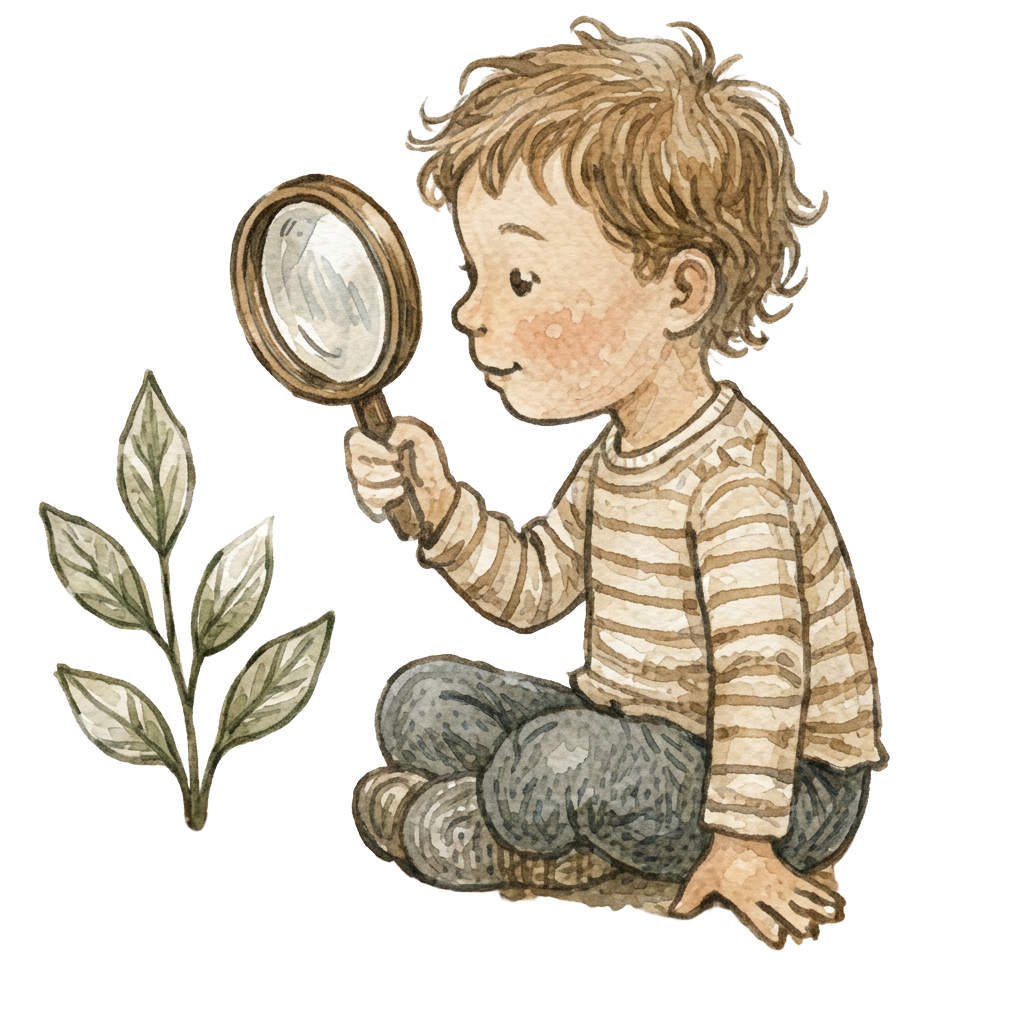
Instead of immediately asking whether an object has been officially admitted into the Montessori Club, look at the child.
What does the child do with it? Does it invite purposeful activity? Can the child manipulate it? Does it correspond to something they are developmentally working toward? Does it allow repetition? Does the child have some independence within the activity? Is there a clear point of interest? Is the activity so overstimulating that the child is mostly watching the object perform?
These questions are more useful to me than: is it wooden?
Because children do not develop through wood. They develop through activity.
Montessori Materials Often Allow the Child to Notice an Error
You will hear Montessori guides use the term control of error.
It sounds very serious. Almost like the material is conducting a performance review.
It is actually a beautiful idea. A control of error allows the child to receive information about what they have done without always needing an adult to immediately correct them.
AMS describes Montessori materials as often providing immediate feedback that helps a child recognize and learn from an error without relying on adult intervention. AMI similarly discusses control of error as a way for children to notice, think about, and work through mistakes as they move toward mastery.
Think about a puzzle. You have one piece left. There is one space left. The piece does not fit.
Something happened.
The adult does not immediately need to lean over the child and say: "No, no, no. This one goes here."
The child can look. Think. Maybe take another piece out. Try something. Change their mind. Try again.
This matters. Because every time I immediately correct a child, I place myself between the child and the information.
Sometimes that is necessary. Sometimes the child needs a presentation. Sometimes the child needs help.
But sometimes? I am just uncomfortable watching someone struggle for nine seconds. So I jump in.
Montessori materials often create space for the child to notice. And the prepared adult has to create space too.
That is much harder than buying the wooden puzzle.
Simple Does Not Mean Boring
This is another assumption I hear. Montessori materials look too simple. Children need exciting things! Lights! Sounds! Buttons! A dancing cartoon avocado teaching shapes!
I made that last one up. Although I am honestly not confident it does not exist.
But here is the thing. Simple does not necessarily mean boring to a child. Sometimes simplicity helps the child see what matters.
Imagine I am trying to help you notice a very specific sound. I could place you in a quiet room and make the sound. Or I could put on music, turn on the television, hand you a blinking flashlight, and release six puppies.
You might enjoy yourself more in the second room. But are you noticing the sound?
Many Montessori materials intentionally isolate a particular quality, relationship, or challenge. The child can focus. This object is longer. This one is shorter. This sound is different. This quantity is larger. This shape does not fit here.
The simplicity is not an absence of thought. The simplicity is part of the thought. We removed some of the noise so the child can see.
And No, Your Entire House Does Not Need to Become Beige
Parents. Please hear me.
Your home does not need to look like a Montessori classroom. Actually, your home should look like your home.
There can be color. There can be family photographs. There can be cultural objects. There can be evidence that actual human beings live there.
The Montessori prepared environment is not about erasing personality.
AMI describes prepared environments around order, simplicity, accessibility, purposeful activity, freedom of movement and choice, and the relationship between the child, the adult, and the environment.
The question is not: does my home match the Montessori aesthetic?
Try asking: Can my child reach the things they are expected to use? Does everything have a place? Is the environment so full that choosing becomes overwhelming? Can the child participate in daily life? Can they get a glass of water? Can they put their shoes away? Can they help prepare food? Is the furniture appropriate for their body when possible? Are there meaningful activities available?
Does my environment constantly tell my child, "Do not touch"?
Or are there spaces that say: you live here too.
That is a prepared environment conversation.
And yes. Maybe the stool is plastic. The child will survive.
Practical Life Is Probably the Best Example of This
One of the reasons I love Practical Life is because it completely destroys the idea that Montessori requires expensive wooden toys.
What might a child use? A spoon. A bowl. A small pitcher. A sponge. A cloth. A broom. A button. A zipper. A plant.
Real objects. Real movements. Real reasons for doing things.
AMI describes Exercises of Practical Life as an essential part of the Montessori environment, connected both to daily cultural life and to the developmental needs of the child.
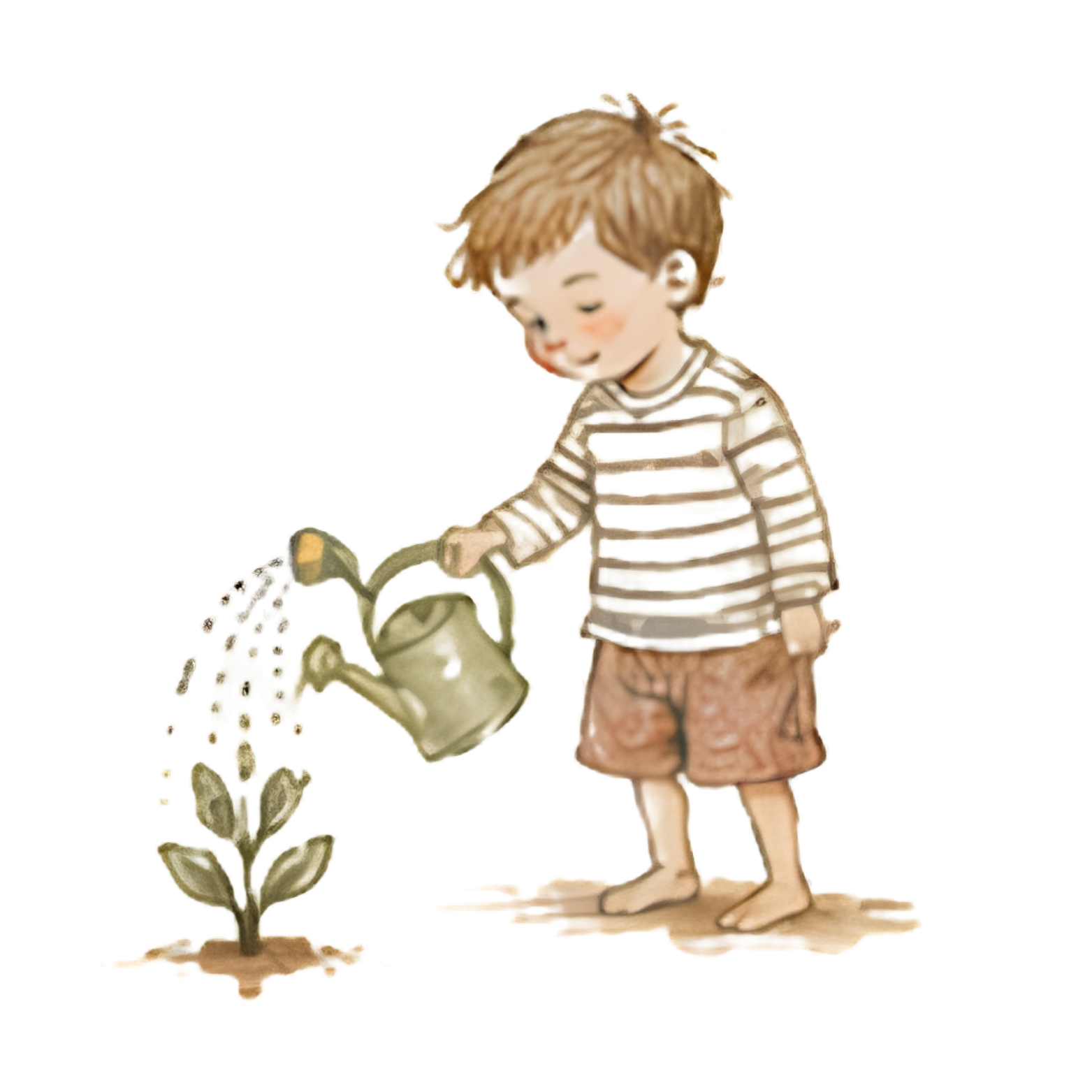
The child wipes a table because tables need wiping. They water a plant because the plant needs water. They wash a cloth. Sweep crumbs. Peel a banana. Fasten a button. Pour water.
These activities can look incredibly ordinary. That is part of their beauty.
We sometimes spend so much time trying to create activities for children that we forget: life already has activities. Children see us doing things all day. And they want to participate.
Have you ever tried to sweep near a three-year-old? You have an assistant now. Whether you requested one or not.
The Montessori question is: how do I prepare the activity so the child can participate successfully?
Maybe I provide a smaller broom. Maybe the cleaning cloth has a clear place. Maybe the pitcher is an appropriate size for the child's hand. Maybe I slow down when I show them.
The object does not need a Montessori label. The adult needs to think about the child.
"Montessori-Inspired" Is Everywhere Now
Here is where things get a little complicated.
Montessori has become a marketing word. Search for children's products and you will see it everywhere.
Montessori toy. Montessori busy board. Montessori climbing toy. Montessori sensory toy. Montessori learning tower. Montessori vegetable peeler.
Okay.
Sometimes the product genuinely aligns with Montessori principles. Sometimes I think someone discovered that adding the word "Montessori" allows the price to increase by forty dollars.
I cannot prove that. It is simply a personal observation.
But parents should know this: "Montessori" on the product title does not automatically tell you what the child will experience.
Look at the activity. Look at the purpose. Look at the child's developmental needs. Look at the quality. Look at whether the child can use it independently after appropriate guidance. Look at how much the object does and how much the child does.
That last question is one I come back to often. Who is doing the work? The toy? Or the child?
There is a big difference between a child pressing a button and watching something happen and a child using their own movement, thought, coordination, and concentration to create an outcome.
Again, I am not saying a child can never press a button. I press buttons every day. I turned on the lights this morning. Very advanced work.
I am saying we should look deeper than the label on the box.
Montessori Is a Relationship, Not a Shopping List
I think this may be the part that gets lost online.
You cannot buy your way into Montessori.
You can purchase every Montessori material. You can have the perfect shelf. You can order the tiny pitcher. You can label every basket. You can own six different shades of linen.
And still miss the child.
Because Montessori asks something of the adult too. Observe. Prepare. Slow down. Show carefully. Protect concentration. Know when to offer help. Know when your help is becoming an obstacle. Allow repetition. Trust development. Respect the child's effort.
The shelf matters. The material matters. But the adult is part of the environment.
AMI's descriptions of Montessori environments repeatedly connect the child's development not only with materials, but with choice, movement, uninterrupted work, and prepared educators who understand their relationship with the child.
You cannot Amazon Prime observation. Unfortunately. That one requires us.
So, What Actually Makes Something Montessori?
I wish I could give you a perfect checklist.
Actually, the internet loves checklists. So maybe I should say: THE 7 SECRET SIGNS YOUR TOY IS MONTESSORI. NUMBER FIVE WILL SHOCK YOU.
But I do not think Montessori works that way.
Instead, I would ask:
What is the purpose? What is the child doing? Does this correspond to a developmental need I am observing? Can the child actively engage with the material? Is there room for repetition? Does the activity build independence? Does the child receive information from their own experience? Is the environment prepared so the child can use the material successfully?
And maybe most importantly: Am I looking at the child, or am I looking at the trend?
Because Montessori was never supposed to be about creating a beautiful shelf for adults to admire.
The shelf serves the child. The material serves the child. The environment serves the child's development.
Wood can be beautiful. Natural materials can offer wonderful sensory experiences. A carefully prepared shelf can bring order and accessibility to an environment. I am not arguing against any of that.
I am just saying: do not confuse the appearance of Montessori with the work of Montessori.
One photographs very well. The other may look like a three-year-old standing very seriously beside a puddle of water, holding a sponge.
And honestly? That is usually where the interesting work is happening.